

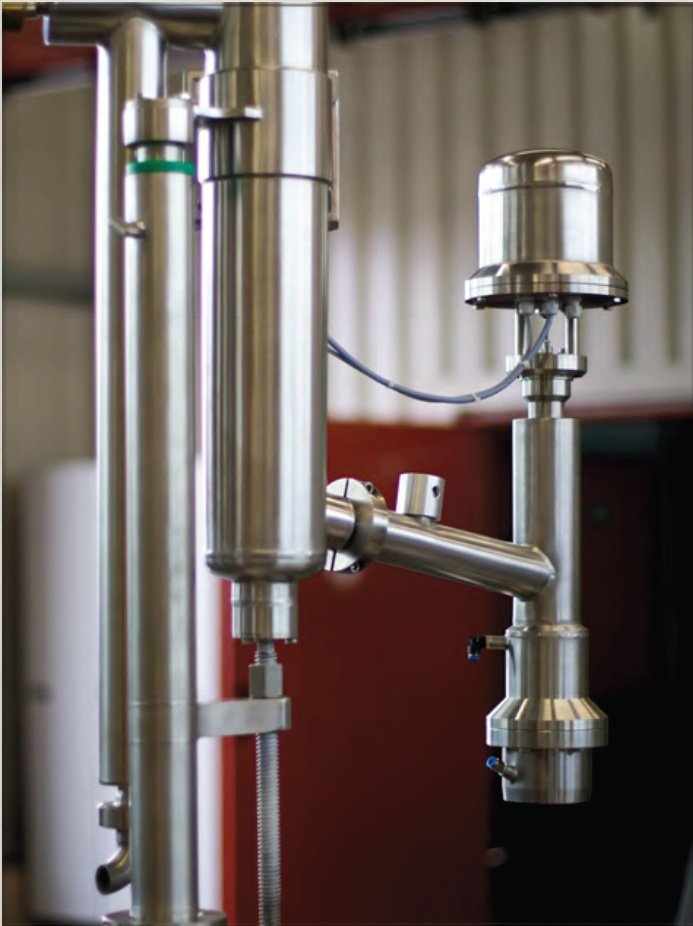
Our liquid nitrogen (LIN) dosing units add a precise dose of liquid nitrogen to each container just before capping or seaming, giving you controlled container pressurisation and reduced headspace oxygen on both hot-fill and cold-fill lines.
At -196°C (-320°F), the dosed liquid nitrogen evaporates rapidly at ambient temperature and expands to roughly 700 times its liquid volume as nitrogen gas. The expanding gas pushes air and oxygen out of the container, and once the container is closed it builds internal pressure that keeps the pack stable and protects product quality.
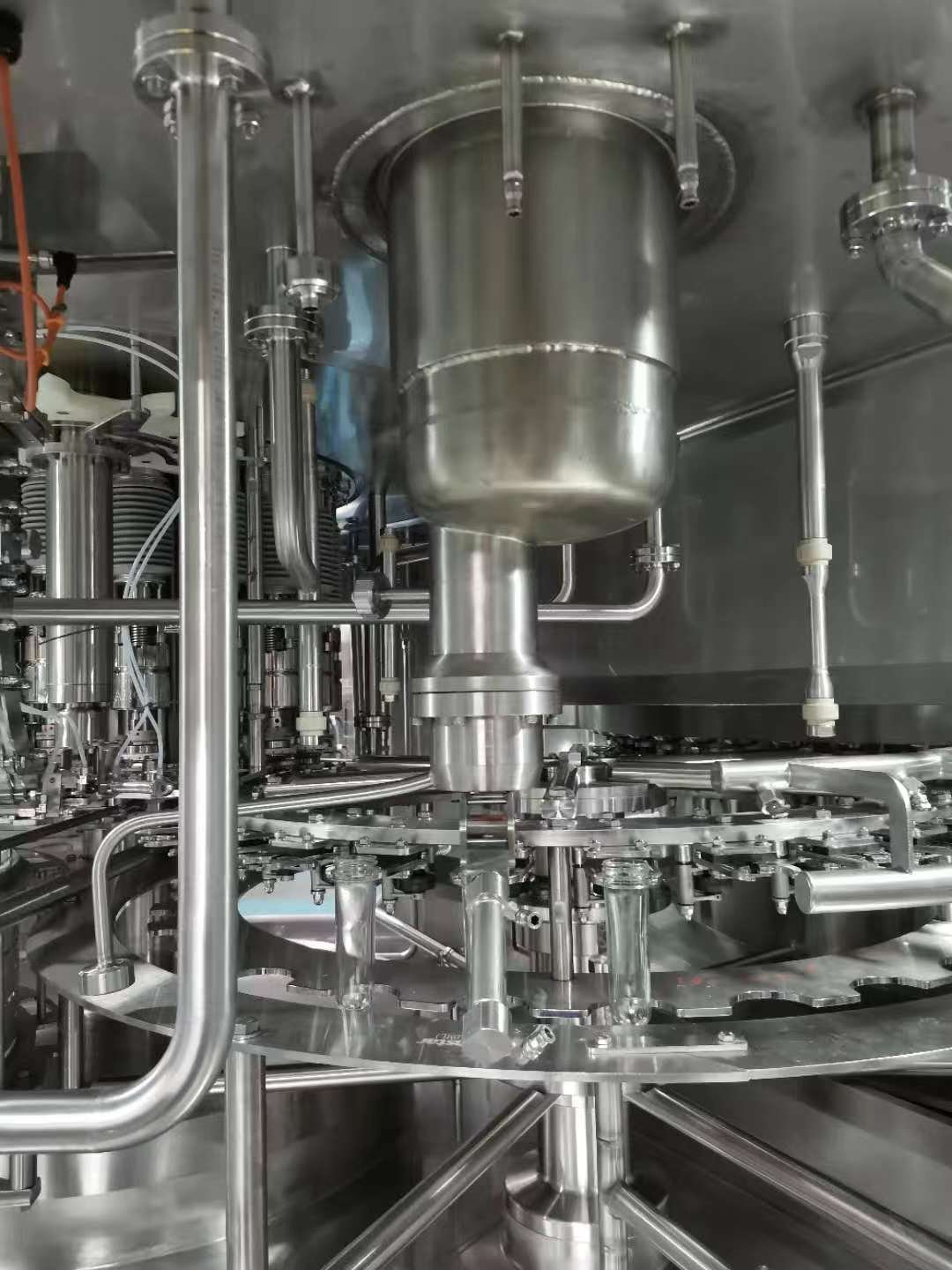
Our aseptic liquid nitrogen units supply sterilised liquid nitrogen for pharmaceutical applications and Cold Aseptic Filling (CAF) processes, where everything that comes into contact with the product must be sterile.
Despite its extremely low temperature, liquid nitrogen only halts the growth of unwanted microorganisms. It does not eliminate them. Our aseptic units sterilise the liquid nitrogen so it can be used safely in sensitive applications that must meet strict hygiene and industry requirements.
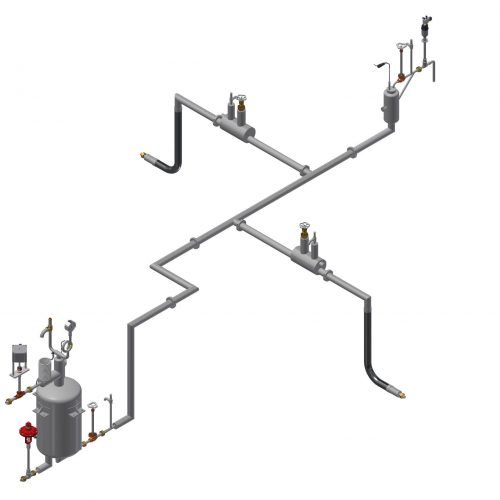
Our vacuum insulated piping (VIP), also known as vacuum jacketed piping (VJP), transports liquid nitrogen and other cryogenic liquids with minimal heat gain. The vacuum between the inner and outer pipe reduces boil-off and keeps a steady liquid supply to your dosing units and process equipment.
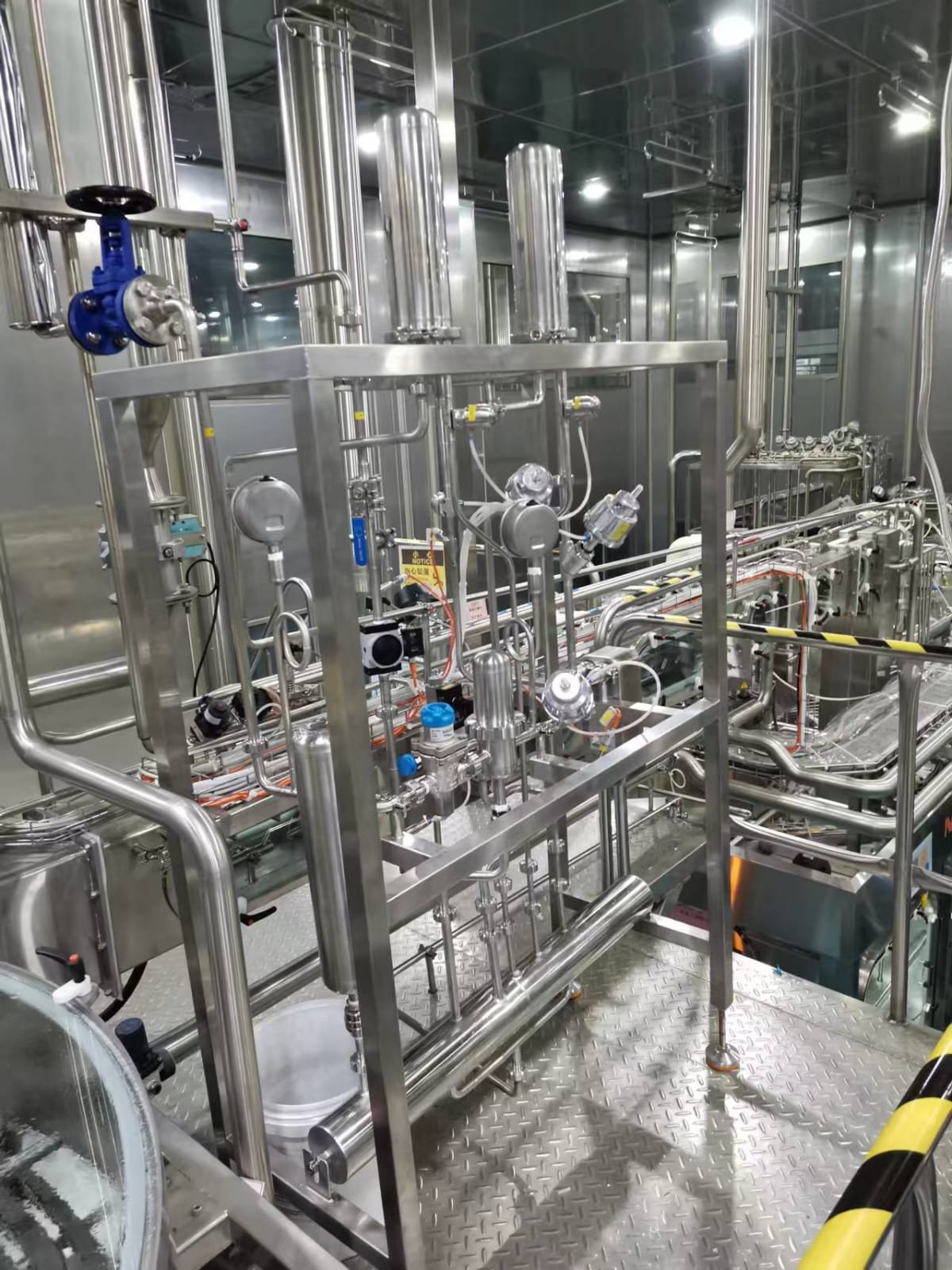
Our skid-mounted on-site sterile LIN production units are compact, fully integrated systems that sit on the cap preparation platform or directly beside the filler, as an integrated part of a cold aseptic filling line.
After the system is sterilised, sterile-filtered gaseous nitrogen is liquefied inside the unit. The sterile liquid nitrogen (S-LIN) is then fed to the S-LIN dosing head, which has an integrated control dosing valve. The valve responds to signals from the filler (bottle, speed and dosing position) to dose S-LIN accurately and hygienically into each container.
FAQ / Dosing
How LIN dosing works and why fillers use it.
Liquid nitrogen dosing adds a small, precise amount of liquid nitrogen to each container just before it is capped or seamed. At -196°C (-320°F), the liquid evaporates quickly and expands to roughly 700 times its volume as nitrogen gas. This pushes air and oxygen out of the headspace and, once the container is closed, builds pressure inside it.
There are two main reasons. First, the internal pressure gives still, non-carbonated products in PET bottles and cans the rigidity they need for conveying, stacking and labelling, which can also allow lighter containers. Second, removing oxygen from the headspace helps protect flavour, colour and shelf life.
Yes. Our dosing units are designed for both hot-fill and cold-fill applications. In hot filling, the product contracts as it cools, which can create a vacuum that deforms the container. The nitrogen pressure counteracts this and keeps the container in shape.
Yes. Our liquid nitrogen dosing units are available for both rotary and linear filling lines.
The dosed liquid nitrogen evaporates into nitrogen gas inside the container headspace. Nitrogen is an inert gas that makes up about 78% of the air we breathe, which is why it is widely used in food and beverage packaging.
LIN and LN2 are both abbreviations for liquid nitrogen. S-LIN stands for sterile liquid nitrogen, which is used on aseptic filling lines.
FAQ / Sterile LIN
Sterile liquid nitrogen for pharma and cold aseptic filling.
Despite its extremely low temperature, liquid nitrogen only halts the growth of microorganisms. It does not eliminate them. In pharmaceutical applications and Cold Aseptic Filling (CAF), everything that comes into contact with the product must be sterile, so the liquid nitrogen must be sterilised before it is dosed.
Our aseptic liquid nitrogen units supply sterilised liquid nitrogen for pharmaceutical applications and Cold Aseptic Filling processes, so it can be used safely in sensitive applications with strict hygiene requirements.
After the system is sterilised, gaseous nitrogen passes through 0.2 µm hydrophobic sterile filters and is liquefied inside the unit. The sterile liquid nitrogen (S-LIN) is then fed to the S-LIN dosing head, where an integrated control dosing valve responds to signals from the filler (bottle, speed and dosing position) to dose each container accurately.
The skid is compact and fully integrated, so it can be placed on the cap preparation platform or directly beside the filler. It comes with the required valves, sterile gas filters, steam supply for sterilisation and heating, and electrical and pneumatic cabinets, ready for operation.
FAQ / Piping
Moving cryogenic liquids with minimal losses.
Vacuum insulated piping, also called vacuum jacketed piping (VJP), is a double-walled stainless-steel pipe with a vacuum between the inner and outer walls. The vacuum greatly reduces heat transfer, so cryogenic liquids such as liquid nitrogen stay cold while they are transported.
Vacuum insulation lets far less heat into the line than foam insulation. That means less liquid nitrogen boils off, less flash gas reaches your equipment and dosing units receive a steadier liquid supply. The outer pipe also stays free of frost, ice and dripping condensation.
Both. Our stainless-steel vacuum insulated piping is available in rigid and flexible configurations to suit your plant layout.
Our VIP has a double-walled, welded construction. Every seam is leak tested with a helium mass spectrometer, then pickled and passivated. Pre-manufactured sections are evacuated to final vacuum before delivery and fitted with a compensator for the different thermal expansion of the inner and outer pipe, plus a pump-out port.
At Terboven Cryo, we tailor our cryogenic equipment to your process. If our standard products don’t match your requirements, we’ll work with you to develop an individual solution.
We are Terboven Cryo, a Singapore company specialising in cryogenic application technology, with more than 10 years of experience.
Copyright © 2026 Terboven Cryo | Website by Creatif.work